
You probably think of your dental checkup as a time for the dentist to check for cavities and clean your teeth. And you’re right. That is a big part of it. But Dr. Mike Williamson and our team are also looking for clues about your overall health. And sometimes, we see those clues before your regular doctor does.
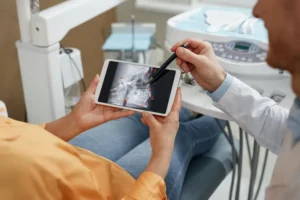
The Mouth Is a Window to the Body
Your mouth isn’t separate from the rest of you. It’s connected to every system in your body through your bloodstream, immune system, and nerves. That’s why dentists are trained to spot signs of more than 100 different health conditions that can show up first in your teeth, gums, tongue, and jaw.
Some experts describe the mouth as the gateway to the body and oral health as the canary in the coal mine. So what exactly are we looking for? Here are some of the most common conditions that can leave clues in your mouth.
Diabetes
People with undiagnosed or poorly controlled diabetes often have gums that bleed easily, swell, or look red and inflamed. That’s because high blood sugar makes it easier for bacteria to grow and harder for your body to fight off infections.
If Dr. Mike notices your gums are more inflamed than usual, even when you’re taking good care of them, he might ask if you’ve been feeling extra tired or thirsty. Those could be signs to check your blood sugar.
Heart Disease and Stroke Risk
Research has shown a clear link between gum disease and heart problems. The same bacteria that cause gum infections can actually enter your bloodstream and contribute to inflammation in your blood vessels. That inflammation is a known risk factor for heart attacks and strokes.
When we see signs of advanced gum disease, such as deep pockets, receding gums, and loose teeth, it’s not just about saving your smile. It’s also a chance to encourage you to check in with your primary care doctor about your cardiovascular health.
Acid Reflux (GERD)
Have you ever noticed your back teeth looking thinner or more worn down than they used to? That could be a sign of stomach acid reaching your mouth while you sleep.
Stomach acid is powerful stuff. It’s meant to digest food, not sit on your enamel. Over time, it wears away the protective surface of your teeth. Dr. Mike often spots this erosion before patients even realize they have acid reflux.
Osteoporosis
This condition causes bones to become weak and brittle. And your jaw is bone too. During your regular dental x-rays, we can see if the bone density around your teeth is decreasing.
Loose teeth or bone loss on x-rays can be early warning signs that osteoporosis might be developing elsewhere in your body. That’s information we can share so you can get tested and start protecting your bones.
Oral Cancer
This one is serious, and it’s exactly why we do an oral cancer screening at every checkup.
We’re checking for red or white patches, lumps, rough spots, or sores that don’t heal. If we find something suspicious, we can refer you to a specialist for a biopsy. Finding oral cancer early makes a huge difference in treatment outcomes.
Sleep Apnea
Do you grind your teeth at night? Snore loudly? Wake up with a dry mouth or a headache? Those could be signs of sleep apnea, a condition where your breathing stops and starts during sleep.
Dr. Mike can spot the wear patterns on your teeth from grinding, and he can check for things like an enlarged tongue or red throat that often go along with sleep apnea. Untreated sleep apnea is linked to heart disease, diabetes, and stroke, so catching it matters.
Autoimmune Conditions and More
Even conditions like lupus, Crohn’s disease, and rheumatoid arthritis can show signs in your mouth. Mouth sores, dry mouth, and unexplained gum inflammation sometimes point to a bigger immune system issue that hasn’t been diagnosed yet.
What This Means for You
We’re not here to diagnose you. That’s your doctor’s job. But we are here to notice things that don’t look quite right and make sure you know about them. That’s why keeping up with your twice-yearly checkups matters, even when your teeth feel fine. We’re looking for more than just cavities.
And when Dr. Mike asks about your health history or any new medications? That’s not just small talk. It helps connect the dots between what we see in your mouth and what might be going on in the rest of your body.
Have questions? New patients can call us at 919-587-8401 or schedule an appointment online.